
To Navigate A Challenging Conversation: Ask Beautiful Questions
Episode 8 of the Building Bridges Series
3-minute read
You know that feeling you have when you’re about to have a conversation with someone who disagrees with you about something that’s important to you? Your heart rate increases. Your jaw may get a little tight. You start mentally rehearsing your best arguments, preparing for battle.
These conversations are genuinely difficult because they trigger our deepest defenses. Our Lizard Brain kicks in, categorizing the other person as a threat to our worldview, our tribal identity, even our sense of self-value. Within seconds, we’re both armed for intellectual combat rather than genuine dialogue.

But what if there’s a different way? What if instead of preparing arguments, we prepared questions?
Why Adults Stop Asking Questions
In The Book of Beautiful Questions, author Warren Berger describes a four-year-old girl as “the ultimate questioning machine”, who will ask anywhere from 100 to 300 questions per day. But by the time we reach adulthood, that natural curiosity has largely disappeared, especially when we encounter ideas that challenge our beliefs.
What happened to our questions? And more importantly, what would change if we brought that childlike curiosity back to our most difficult conversations?

Berger suggests that several forces conspire against our natural questioning instincts as we grow up:
Fear of looking ignorant or uncool. Knowledge that makes us think we already have the answers. Bias that predisposes us to certain conclusions. Hubris that convinces us everyone else is biased, but we’re not. And time pressure that can make us feel like we don’t have the time to waste on unnecessary questions.
But here’s what we lose when we stop questioning: the ability to truly understand people who see the world differently than we do. In our era of political polarization and social division, this is a devastating loss.
When you’re in the middle of a heated ideological argument, the act of listening to and asking respectful questions of those on the other side may seem impossible, but for those still interested in promoting civility, understanding and national unity, it may be the only bridge we have.
Beautiful Questions vs. Gotcha Questions
Not all questions are created equal. There’s a world of difference between a “beautiful question” and a “gotcha question.”
Gotcha Questions are traps designed to embarrass, defeat, or expose someone–to literally put them on the defensive. They’re not seeking genuine answers—they’re weapons disguised as curiosity. Examples might include: “How can you possibly support that candidate?” or “Don’t you care about the suffering of [insert group] that your policies are causing?”
The Power of Listening

Beautiful Questions, by contrast, are genuine attempts to understand. They’re open-ended, non-threatening, and invite storytelling rather than defensiveness. They come from curiosity, not judgment.
Beautiful Questions work because they shift us from trying to prove our point to trying to understand someone else’s experience. This requires what researchers call “empathetic listening”—connecting with someone’s feelings before focusing on facts.
When you ask, “How are you feeling about this issue?” or “What’s your experience been?” you’re inviting people to share their story rather than defend their position. And when people feel heard and understood, they become less defensive and more open.
As playwright Lynn Nottage puts it: “I like to replace judgment with curiosity. I found that people really lean in when you say, ‘How are you feeling and what are you experiencing?’”
Questions That Can Bridge Political Divides
Here are some Beautiful Questions that can help navigate disagreements, especially political ones:
To understand their perspective:
- “I’m curious about something—can you help me understand how you came to that view?”
- “What experiences have you had that shaped your thinking on this issue?”
- “What concerns you most about [the opposing position]?”
To find common ground:
- “Is there anything in my position that you find interesting or reasonable?”
- “Can you find anything in your position that you’re hesitant about?”
- “What values do we both care about here?”
To deepen understanding:
- “Can I try to explain what I think your position is, and then you do the same for me?”
- “What would need to be true for you to consider a different approach?”
Remember: these questions only work if asked with genuine curiosity, not as clever tactics to “win” the argument.
The 80/20 Rule of Communication
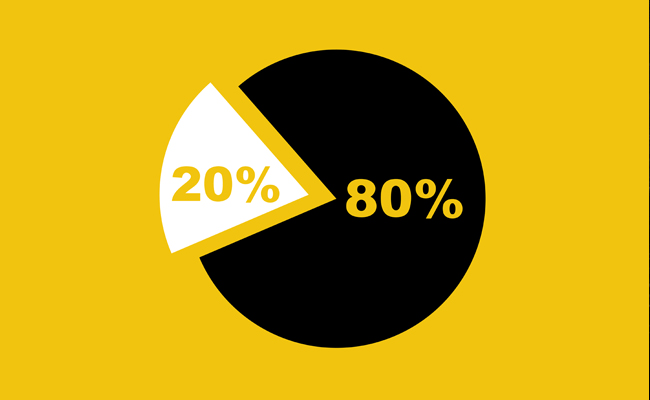
Communication expert Marilee Adams notes that “the most effective communication is about 20% telling and 80% asking. Most of us have turned this around—80% telling and 20% asking.”
This connects back to our earlier discussions about moral foundations and worldviews. When someone holds a political position that baffles you, they’re likely operating from different moral priorities or seeing the world through different filters than you are. Beautiful Questions can help you understand those underlying differences. And asking may eventually lead to a better opportunity for you to explain your own perspective to them.
Before your next difficult conversation, ask yourself:
- Am I genuinely curious about their perspective?
- What can I learn from someone I don’t understand?
- Am I here to listen, or to lecture?
Moving Forward
As writer and Nobel Prize winner Eli Wiesel reminded us, “People are united by questions; it is the answers that divide them.” In our polarized world, the humble act of asking a beautiful question might be our best tool for finding our way back to each other. But if you’re more interested in persuading than in learning, you’re probably heading for a stressful and unproductive experience. Curiosity can help reframe the uncertainty of a contentious conversation as an opportunity, instead of a threat.
Next time you encounter someone whose views are really challenging to you, try approaching them not with arguments but with genuine curiosity. Even if you don’t end up changing their mind, you just might discover something that changes yours. And at least you’ll both have a much more constructive conversation.

Of course, this ain’t easy! Is it hard to stay curious when you strongly disagree with someone? And have you found a way to deal with that? Feel free to add your thoughts below.
Up Next:
“The Trust Crisis: How We’ve Lost Our Shared Reality”







 Building Bridges To Common Ground
Leave a comment