
How Identity Labels Lead To Polarization
Episode 12 of The Building Bridges Series
A 3-minute read
Identity is complex. But our politics has become pretty simple: pick a side, pick a label, pick a team. In doing so, we risk reducing ourselves to bumper stickers. And that feeds polarization.
The labels we use to describe ourselves seem innocent enough. They’re shorthand for our values and interests—convenient ways to signal who we are to others and find our tribes in a complex world.
But as journalist Ezra Klein observes in his book Why We Are Polarized, something profound has shifted: “America is polarized, first and foremost, by identity. Everyone engaged in American politics is engaged, at some level, in identity politics. Over the past fifty years in America, our partisan identities have merged with our racial, religious, geographic, ideological, and cultural identities. These merged identities have attained a weight that is breaking much in our politics and tearing at the bonds that hold this country together.”
These identity labels do much more than just describe us. They actively shape how we see the world, what information we accept, and even who we’re willing to listen to.
The Power of Self-Labels
Look at this identity wheel – it shows dozens of different aspects that contribute to who we are: age, gender, race, ethnicity, education, geographic location, work background, thinking styles, political ideology, religious beliefs, and many more.
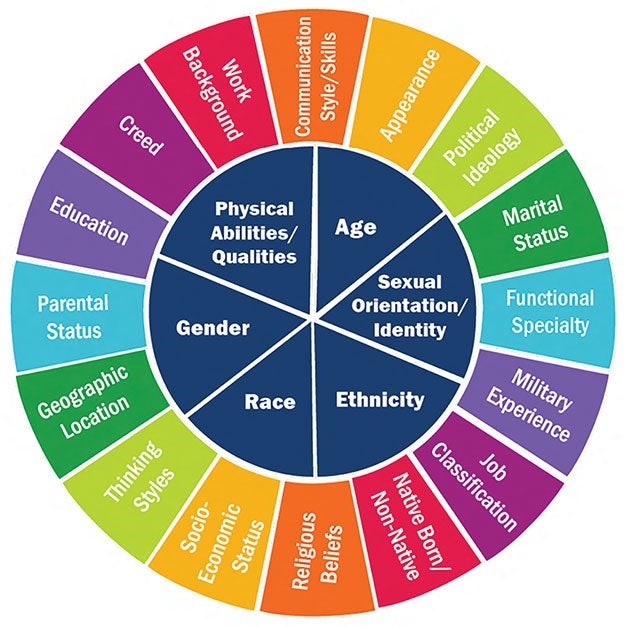
The Social Identity Wheel shows the many different factors that contribute to our identity and how we see ourselves.
If someone were to ask you, “Who are you?”, you might answer: I am a student. I am a parent. I am a guitarist. I am a bartender. I am a blind person. I am a volunteer. Or dozens of other roles or activities you’re associated with.
Yet in our polarized political climate, we often reduce ourselves and others to just one or two labels—usually political or ideological ones. This oversimplification is part of what makes our divisions feel so absolute.
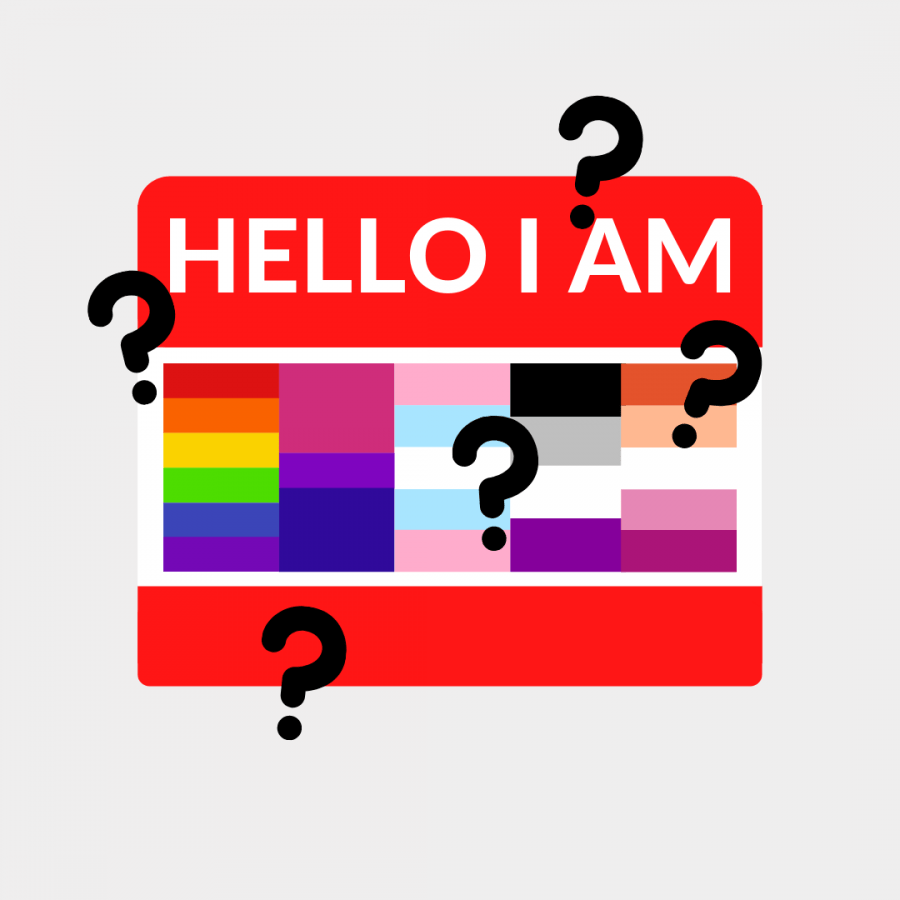
Consider the current emphasis on declaring personal pronouns. While certainly an important aspect of identity for some people, pronouns represent just one slice of this complex wheel. When any single identity marker becomes the dominant way we’re expected to signal who we are, we risk reducing the rich complexity of human identity to a social category. That’s what is also referred to as stereotyping. And that can easily lead to making assumptions about a person based solely on that one label.
When we adopt a label as part of our identity, several things happen:
We strengthen our connection to others who share the label. This fulfills our basic need for belonging and mattering that we discussed in an earlier post.
We start filtering information through that identity. Views that align with our labeled group feel right; those that contradict it feel threatening. Remember our discussion about worldview filters? Identity labels become some of our most powerful filters.
We begin to see outgroups as more different from us than they actually are. Research shows we consistently overestimate how much “the other side” disagrees with us.
We become invested in maintaining the label. Questioning it feels like questioning who we are.
The stronger we identify with a label, the more it influences how we process information and who we trust. At some point, we’re not just describing ourselves with these labels—we’re seeing the entire world through them.
When Labels Become Limiting
There’s nothing wrong with having identities. The problem comes when our narrower identities—political, religious, professional, etc.—overshadow the broader identities we share with others.
Psychologist Henri Tajfel conducted fascinating experiments showing just how quickly labels create division. He found that even randomly assigning people to meaningless groups (like “the blue team” versus “the green team”) was enough to create bias against outgroups. Within minutes, people began favoring their own group members.
When these arbitrary divisions align with deep values and beliefs, the separation becomes even more profound. Today, many of our most visible identity labels are defined in opposition to other groups. Being a “true conservative” or “good progressive” increasingly means rejecting specific ideas rather than standing for shared principles.
This connects to our earlier discussions about tribal identity and confirmation bias. Our labels don’t just describe which tribe we belong to—they supercharge our tendency to accept information from our tribe and reject information from others.
Finding Shared Identities
Sociologist Musa al-Gharbi suggests a powerful antidote to this division: focusing on “superordinate identities”—broader shared identities that include multiple groups.
“There’s a lot of research that shows that actually it’s a lot easier for people to get along if you start by foregrounding things that people have in common—like ‘we’re all Americans’ or ‘we’re all Christians,’” al-Gharbi explains.
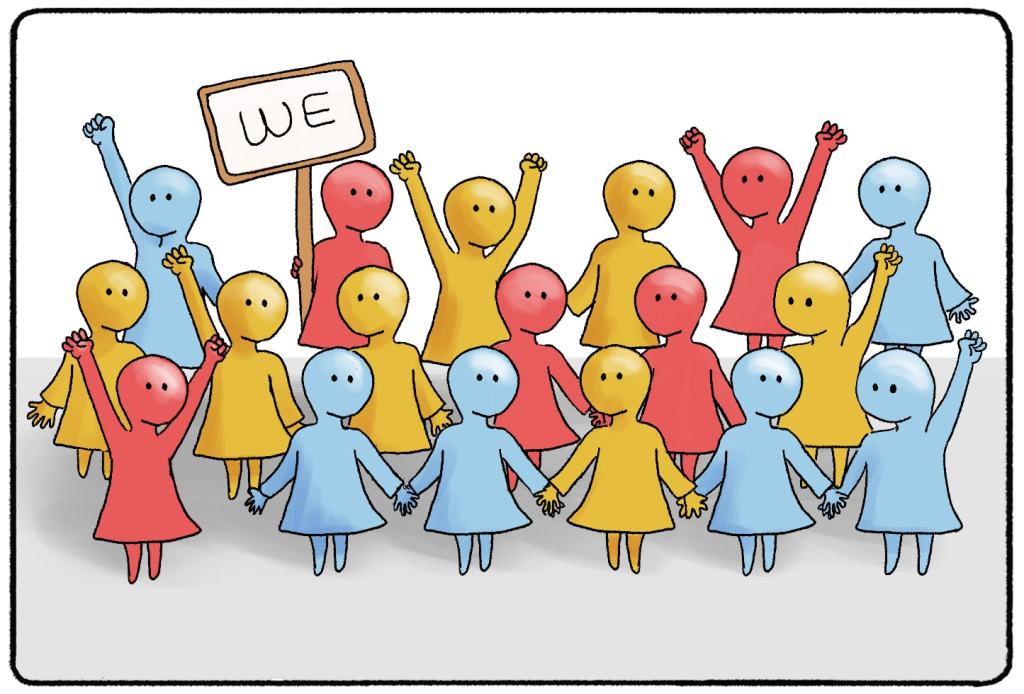
Rather than focusing solely on what divides us, we can emphasize the larger stories that connect us:
- Shared values (freedom, family, fairness, opportunity)
- Common goals (safe communities, good schools, meaningful work)
- Broader identities (parents, neighbors, citizens, humans)
- Shared experiences (weathering challenges, celebrating victories together)
“If you can’t build things up—if you’re only focused on criticizing and deconstructing and problematizing and tearing things down—it’s really impossible to meaningfully sustain shared identities and shared goals and shared values,” al-Gharbi notes.
Loosening the Hold of Limiting Labels
How can we prevent our identity labels from narrowing our worldviews and limiting our ability to connect with others?
Hold your labels lightly. See them as descriptions of some aspects of yourself, not definitions of your entire being. You’re more complex than any single label can capture.
Adopt multiple, overlapping identities. The more varied your identities, the less likely you are to get trapped in a single perspective. You might be a conservative and an environmentalist, a progressive and a veteran, religious and a scientist.
Look for connection points before diving into differences. Start conversations by finding common ground in those superordinate identities we all share.
Question identity-based reactions. When you feel strong resistance to an idea, ask yourself: “Am I rejecting this because it’s wrong, or because it challenges my identity?”
Practice seeing others as complex individuals. Resist the urge to reduce people to representatives of their groups.
Next time you find yourself thinking “as a [your identity label],” pause and consider whether that label might be expanding or limiting your understanding. And when you encounter someone who seems to fit neatly into an opposing label, remember: they’re as complex as you are, with multiple identities and experiences that transcend any single box.
What identity labels do you carry? Have you ever noticed them influencing how you perceive information or other people? Have you found superordinate identities that help you connect across differences? I’d love to hear your thoughts.
Up Next:
“Is Your Bullshit Meter Working Okay?“





 Building Bridges To Common Ground
Leave a comment