

Grievance: Our National Obsession
Episode 14 of The Building Bridges Series
A 4-minute read
We have become a nation of complainers.
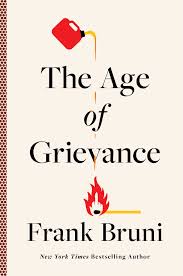
“The American soundtrack has become a cacophony of competing complaints,” writes Frank Bruni in his 2024 book The Age of Grievance, “some righteous and others specious. Some urgent and others frivolous. Those distinctions are too often lost on the complainers. How they feel is all that matters—and they feel cheated. They feel disrespected.”
This feeling isn’t confined to any one race, region, political party, class, faith, gender, or profession. It flares even at the very pinnacles of privilege and power, and the fire seems to be getting hotter all the time.
The Paradox of Grievance
Here’s where things get complicated: grievance has been essential to human progress. As Bruni points out, “Grievance has been the precursor of justice, the prelude to enlightenment. The United States is a nation born of grievance—the revolt of royal subjects unwilling to accept a bad deal.”
Throughout our nearly 250 years as a country, grievance has been the engine of morally urgent change, pushing us toward that “more perfect union.” Our legal system honors grievance. Civil rights movements, women’s suffrage, workers’ rights—all emerged from legitimate grievances demanding redress.
So grievance itself isn’t the problem. The problem is what happens when all sorts of grievances—the greater ones, the lesser ones, the authentic, the invented—are jumbled together. When grievance becomes an all-encompassing lens, an all-purpose reflex, a default setting. When people take their grievances to extreme and even violent lengths that they didn’t before.
Grievance as Addiction
Neuroscientist James Kimmel Jr. discovered something troubling: “Brain imaging studies show that harboring a grievance activates the same neural reward circuitry as narcotics.” It turns out that your brain on grievance looks a lot like your brain on drugs.
What does your brain want to do with that grievance? Retaliate. And the retaliation doesn’t need to be physically violent—an unkind word or tweet can be very gratifying. This creates what Kimmel calls “revenge addiction,” which can spread from person to person as a social contagion. This is particularly powerful when it is modeled by leaders.
This connects to my earlier posts about the Lizard Brain and Tribal Identity–grievance supercharges both. It gives us a powerful emotional hit while reinforcing our tribal bonds: we are the wronged ones, and they are the wrongdoers.
The Competition for Victim Status
Here’s an uncomfortable truth: both the left and the right compete fiercely for victim status. Art critic Robert Hughes warned about this back in 1993, noting a “corrosive culture of victim micrology” where everyone wants to be identified as an outgroup or victim. This creates what Bruni calls “indignity sentries”—people constantly on watch for any slight, any offense, any reason to feel wronged.
Why Now? The Perfect Storm
Several forces have combined to amplify our national obsession with grievance:
The loss of American optimism. At the core of Americans’ anger and alienation is the belief that the American dream is no longer attainable. A major 2016 Harvard study found that while 90% of children born in 1940 exceeded their parents’ earnings, only 50% born in the 1980s had. They titled their study “The Fading American Dream.”
The Dalai Lama once said, “All unhappiness comes from comparison.” When we compare our circumstances to what we hoped and expected to happen, or to what someone else has, or to what was the case for previous generations, grievance grows.
Distance and isolation. As Bruni notes, “Distance nurtures grievance.” This includes not only our physical separation from other people, but also our online (and essentially anonymous) separation from them and the psychological distance created by our differing worldviews. It’s easier to demonize people we don’t know, who seem more like caricatures than living, breathing humans.
Social media and traditional media amplification. Online platforms reward grievance—outrage generates many more clicks than positive posts. But legacy media has also shifted toward opinion over facts, learning that columns and commentary with distinct points of view attract more viewers and readers than straight reporting. The negativity and melodrama of today’s entire information environment amplifies conflict while minimizing upbeat perspectives.

The Deadly Consequences
Unchecked grievances aren’t just ugly—they’re dangerous. When people believe their very freedom is under attack, opponents look like enemies to be vanquished. If you can portray yourself as the victim, that means that by definition, the other side is bad.
A 2022 Pew Research poll found that 72% of Republicans considered Democrats “immoral,” while 63% of Democrats felt that way about Republicans. When asked whether they viewed the other party as political opposition or as enemies, about half of each party chose “enemies.”
This connects directly to our earlier discussion about trust and mattering. When people feel they don’t matter, when they feel dismissed or disrespected, grievance festers. And when grievance goes unaddressed, it hardens into something dangerous.
Finding a Way Forward
So how do we honor legitimate grievances while not drowning in an ocean of complaints?
Face-to-face connection helps. Author and speaker Brene Brown says, “People are hard to hate close up.” Organizations like Braver Angels bring together “Reds and Blues” who feel misunderstood or disrespected by the other side. When participants hear people they’ve never listened to before—and just as importantly, when they feel heard themselves—they often soften. Just having a real conversation where you get to know each other a little bit can go a long way towards finding common ground.
Shared endeavors matter. Pete Buttigieg observed that “anything that gives people the chance to work with other people who are different from them on something hard and get results matters, and it could help cut through pessimism or anger or division or polarization.” Working on a joint project for the common good is a constructive way to create a shared feeling of belonging.
Recognize the difference. Not all grievances are created equal. The January 6th attack on the Capitol and feeling disrespected by a social media post are not comparable concerns. Some grievances are urgent and righteous. Others are invented or wildly disproportionate. Learning to distinguish between them, and responding appropriately to each, is essential.
Address the underlying causes. Many legitimate grievances stem from real problems: economic insecurity, lack of opportunity, feeling invisible to institutions. These need solutions, not just sympathy or dismissal. Just because something is not a problem for you personally doesn’t mean that it shouldn’t be addressed.
Most of us carry multiple grievances—about the economy, our communities, political directions, cultural changes. We face a choice. We can nurse them into weapons against each other, or we can use them as motivation to build the connections and solutions we need. The question isn’t whether you have grievances. It’s whether you’re letting them divide you from potential allies who might share your underlying concerns, even if they describe them differently. Feel free to add your thoughts.







Leave a comment