

Are We Really Persuading Others, Or Just Preaching To The Choir?
Episode 24 of the Building Bridges Series
3-minute read
Do you ever feel like no matter how long and loudly people protest, nothing seems to change? Maybe it’s because turning up the volume control doesn’t change the channel on the TV. Those two things require different actions.
This past spring, hundreds of thousands of Americans turned out for No Kings rallies across the country, marching, chanting, holding signs, making their voices heard. Around the same time, packed arenas full of MAGA supporters were doing much the same thing at Trump rallies, cheering, chanting, energized and united around a shared cause.
Both groups were passionate. Both were committed. And both were almost entirely surrounded by people who already agreed with them.
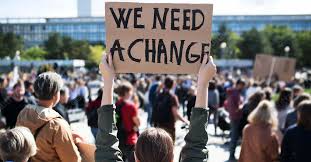
That’s not a criticism. It’s just worth asking: if the goal is to change minds, how much of what we call political engagement is actually doing that?
Here’s what the research suggests: not much. Most of what looks like persuasion is actually something else. Identity reinforcement, social bonding, emotional release, and mobilization. In other words, it’s about energizing people who already agree with you, not converting people who don’t. Protesters and rally-goers aren’t really talking to their opponents. They’re talking to each other.
This connects to patterns we’ve explored in earlier posts: tribal behavior, confirmation bias, identity politics. When your political beliefs are bound up in who you are, arguing for them in a crowd of like-minded people feels meaningful. It fires people up to show up, donate, and vote. That’s mobilization — and it works. It also provides participants with a sense of hope and possibility. But those are different goals than actually changing the minds of people who see the world differently.
There’s another dynamic at work too. Once someone has spent years, or even decades, arguing a position, it becomes very hard to admit that the strategy isn’t working. The natural response is to do more of the same thing, not less. Double down. March again. Post again. Write letters to the editor. These efforts can feel productive even when the results don’t show it.
So does protest accomplish anything? Actually, yes, but probably not the way most people imagine. Think of it this way: many of us approach political persuasion like someone trying to melt ice with a hair dryer. Direct, fast, focused. Make it happen now. But producing systemic, cultural change is more like shifting the climate: slow, indirect, operating through social norms, media framing, and eventually policy. Same destination, completely different mechanism. Protest and advocacy do move things, but over long timescales and through institutional channels, not through head-to-head conversion in the street or on social media.
This is worth considering, because it helps explain something a lot of us feel but struggle to name. If you’re part of the exhausted middle, tired of the noise, tired of the gridlock, tired of watching both sides pour enormous energy into strategies that don’t seem to move the needle, your frustration makes complete sense. Am I really making a difference?
But cultural change is slow. There probably aren’t any quick fixes. That’s a hard thing to accept, and frankly, it’s exhausting in its own right. But it’s also clarifying. If we know the hair dryer isn’t working, we can stop burning ourselves out with it and redirect some of our time and energy.

So what can move the needle? A few things are worth trying right now, even within the limits of slow cultural change.
First, shift your goal from winning arguments to building understanding. Ask questions more than you make points. Genuine curiosity about why someone believes what they believe opens more doors than a well-constructed rebuttal.
Second, invest in relationships across the divide, not debates. The research is clear that prolonged exposure to people whose values differ from ours — in contexts of mutual respect — is one of the few things that actually shifts deeply held beliefs over time. (For a deeper look at the science behind this, see research on the Contact Hypothesis.)
That brings up a bigger question, one worth exploring in a future post. If cultural change happens slowly, and our current political system keeps pushing us further apart, maybe it’s time to ask: is the system itself part of the problem? And if so, what would it take to fix it?

Read more of the Building Bridges To Common Ground Series >>







Leave a comment