
“We The People”, Part 2:
How To Realize Democracy For All
Episode 26 of the Building Bridges Series
A 3-minute read
In Part 1 of “We The People”, we looked at how a relatively small minority — party insiders, wealthy donors, passionate activists, and incumbent officeholders — has taken control of a democratic system that was designed to serve all of us. We saw how closed primaries, gerrymandering, and negative partisanship have combined to produce a Congress that 86% of Americans disapprove of, yet feel powerless to change.
So what do we do about it?
The good news — and there is good news — is that real solutions exist, some of them already working in states across the country. The even better news is that the majority of Americans already agree that change is needed. We just need to channel that agreement into action.
Proof That It Can Work
Let’s start with Alaska, because Alaska gives us hope.
Since 2022, Alaska primary voters have used a single ballot on which all candidates for statewide office appear — regardless of party. The top four vote-getters advance to the general election, where ranked-choice voting determines the winner. Voters rank candidates in order of preference, which means they’re no longer forced to choose the “lesser of two evils.”

The result? Senator Lisa Murkowski, a Republican who has repeatedly broken with her party on key votes, won re-election in a state where she faced fierce opposition from party leadership. The open primary system, she says, helped insulate her from party pressure. “Obviously the parties don’t like that,” Murkowski observed, “because they want control. I think it should be the people that are in control — and not the parties.”
That’s “We the People” in action.
Structural Reforms Worth Fighting For
Alaska isn’t alone. And its success points toward a broader truth: if the current system punishes cooperation, then fixing the system is how we restore it. A growing movement across the country is pushing for structural reforms that would restore majority power to our democracy. The most promising include:
Open primaries: Registered voters can cross party lines and request a ballot from a party different than the one they’re registered with. This broadens the pool of primary voters beyond the most committed partisans. But there’s an important limitation: parties still run separate primaries, and as political analysts have noted, the most enthusiastic supporters of both parties tend to hold the most extreme views — while the broader swath of more moderate voters who actually decide general elections remains underrepresented.
Nonpartisan or “jungle” primaries: A stronger reform, currently used in California and Alaska. Every candidate appears on a single ballot regardless of party affiliation, and the top vote-getters advance to the general election. Party insiders lose their gatekeeping power entirely. This is the model Senator Murkowski credits with freeing her to represent her constituents rather than her party.
Ranked-choice voting: Voters rank candidates by preference rather than choosing just one. This eliminates the “lesser of two evils” dynamic, encourages more civil campaigning, and gives voters genuine choice without fear of “wasting” their vote. Often paired with nonpartisan primaries for maximum effect, as in Alaska.
Approval voting: Rather than ranking candidates in order by preference, in approval voting a voter selects all the candidates they support. That could be just one candidate, or several that they think are acceptable choices. All the ballots are gathered and tallied, and the person “approved” (selected) by the most voters wins.
Independent redistricting commissions: Rather than allowing politicians to draw their own district maps — essentially choosing their voters rather than the other way around — independent commissions draw boundaries based on communities, not partisan advantage.
A 2022 poll by NPR, PBS News, and Marist found that three-quarters of Americans said they want government officials to compromise and find solutions rather than stand on principle and cause gridlock. These reforms simply create the conditions where compromise becomes possible again. But they will only happen if the moderate majority — the exhausted, the frustrated, the politically homeless — decides to show up in greater numbers than the passionate extremes who currently dominate the process.
The Pro-Human Mindset Shift
Structural reforms matter enormously. But they won’t be enough on their own. As we’ve explored throughout this series, our divisions run deeper than any single policy fix can reach.
What we also need is a fundamental shift in how we think about each other and about our shared project as Americans.
We need to focus more on how we can live together as a diverse society, instead of which political party is going to have control.
We have to be less tribal and more Pro-Human.
That means believing that our fellow citizens — even the ones who voted differently than we did — are not morally bad people. Remember the startling statistic from Part 1: America is the only nation out of 25 comparable countries where a majority of people believe their fellow citizens are morally bad. That belief is both wrong and dangerous, and we have the power to change it — one conversation at a time.
It means believing, as Rick Hubbard discovered on his 3,000-mile walk, that most Americans share the same basic aspirations: safety, opportunity, fairness, and a government that actually promotes the general welfare of all its people.
And it means believing, as Tom Friedman reminds us, that our shared citizenship is more powerful than our grievances and differences — that we are still capable of making, “out of many, one”.
What You Can Do
Real change starts with individual action. Here are some concrete steps that actually matter:
Vote in primaries. This is the most underutilized tool available to ordinary citizens. Fewer than one in ten eligible voters currently participates in primaries. If you’re not one of them, you’re handing your power to the most extreme voices on both sides.
Support electoral reform. Organizations like Open Primaries and Braver Angels are working on structural and cultural change. Find one that resonates and get involved.
Engage locally. The most competitive, most responsive elections happen at the local level — school boards, city councils, state legislatures. This is where individual voices carry the most weight and where real problem-solving still happens.
Resist negative partisanship. The next time you find yourself supporting a candidate primarily because you despise their opponent, pause. Ask what you actually stand for, not just what you stand against. As chef José Andrés put it: “It isn’t about who you stand with, it’s what you stand for.”
Have the conversations. As we’ve discussed throughout this series, bridge-building starts with human connection. Talk to people who think differently. Listen more than you argue. Look for the shared values underneath the surface disagreements.
The 250th Anniversary Moment
As we mark 250 years of this imperfect, frustrating, remarkable democratic experiment, we face a choice. We can continue on the path toward what Tom Friedman calls “our collective race to the bottom.” Or we can remember what this project was always supposed to be about.
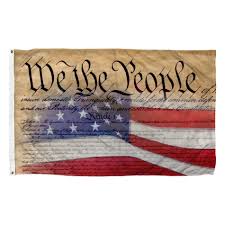
The Preamble doesn’t say “We the Republicans” or “We the Democrats.” It says We the People. All of us. And after 250 years, that still means something.
The majority of Americans — exhausted, frustrated, and politically homeless as many of us feel — want the same basic things. We want neighbors, not enemies. We want solutions, not weapons. We want a democracy that actually works for all of us.
We have the numbers. We just need the will.

Read more of the Building Bridges To Common Ground Series >>







Leave a comment