
“We The People”, Part 1: How A Minority Took Control Of Our Democracy
Episode 25 of the Building Bridges Series
A 4-minute read
“I believe the most underappreciated political aspiration in America today is the hunger of many Americans to be pulled together and not pulled apart. They want to see one another as neighbors again, not the enemy next door.” — Tom Friedman
When was the last time you walked across America for democracy?
Rick Hubbard did, as part of his Walking To Fix America initiative. About 10 miles a day for 300 days, an American flag strapped to his back, striking up conversations with strangers from all walks of life. His opening line was often a reference to the Preamble to the Constitution: “We the People of the United States, in Order to form a more perfect Union…”
Along the way, he asked everyone he met a simple question: How well do you think your elected representatives have been doing their job of representing us over the last several decades?
He didn’t meet a single person who thought they were doing it well. Not one.
Something Has Gone Wrong
As we approach the 250th anniversary of the founding of this remarkable democratic experiment, that finding deserves our full attention. The Preamble sets out six clear goals for our government, including this one: “promote the general Welfare” — to foster the well-being, health, and prosperity of all Americans.
All Americans. Not just the ones who voted for the winning party. Not just the ones who donated to the right campaign. All of us.
So why does it feel like that goal has been abandoned? And more importantly — who’s actually in charge?
The Minority Behind the Curtain
Here’s the disturbing truth: a relatively small number of people hold an outsized amount of power over our political system. This minority includes:
- Party insiders who control which candidates get support, funding, and access to the ballot
- Wealthy donors who influence decision-making and shape who gets elected
- Passionate activists who dominate the primary process
- Incumbent officeholders who benefit from a system that protects their seats
- Media voices with large audiences who amplify outrage instead of solutions
None of these groups represent the majority of Americans. But together, they’ve built a system that works remarkably well — for them.
The Primary Problem
The single biggest structural flaw in our democracy may be the primary election system. According to research by the Brookings Institution, in a typical midterm election fewer than one in ten eligible voters participates in the primaries that determine most of our congressional choices — and those who do tend to hold the most extreme views in their parties.
That means the vast majority of Americans are not involved with choosing who appears on their ballot in November.
As John Opdycke, founder of Open Primaries, told NPR: “There has been a ratcheting up, a ramping up of both the willingness and the ability of both the Democrats and the Republicans to shape outcomes before the voters get a chance to have a say. And that’s really devastating.”
The result? To win at that game, candidates must appeal to the most passionate — and often most extreme — members of their party just to survive a primary. Once elected, those same officials face a brutal choice: work across the aisle and risk losing their seat in the next primary, or focus on what “the base” wants and keep their job.
The system essentially punishes cooperation. As Opdycke puts it, elected officials from opposing parties “can’t even be seen in the same room with each other, because the primary structure punishes any kind of collaboration.” A Republican and a Democrat who find common ground on even one issue become vulnerable to primary challenges from someone more ideologically “pure.” Reaching across the aisle has become a career risk. So it shouldn’t be surprising that we’re not seeing much of it these days. And that’s precisely how gridlock is created–so not much is getting done.
Gerrymandering Makes It Worse
The primary problem doesn’t exist in isolation. Thanks to decades of partisan gerrymandering — and accelerated by recent redistricting efforts — more than 90% of U.S. House seats are now considered “safe” for one party or the other.
Safe seats produce extreme candidates. Extreme candidates have no incentive to compromise. And no compromise means no progress on the issues most Americans actually care about and often agree on.
As Iowa gubernatorial candidate Rob Sand observed, our system “incentivizes demonizing opponents and perceived enemies over solving problems and working together.” Neither party, he argues, “solves enough problems to deserve a monopoly on our choices at the ballot box.”
The Cost of Negative Partisanship
What holds this dysfunctional system together? Largely, it’s what political scientists call “negative partisanship”: supporting your party not because you believe in it, but because you despise the other side. It’s a particularly ugly aspect of our tribal nature as humans.
New York Times opinion columnist David French recently noted a startling finding: America is the only nation out of 25 comparable countries where a majority of people believe their fellow citizens are morally bad. Is it any wonder, then, that compromise feels like surrender and neighbors feel like enemies?
Tom Friedman captures the tragic result: “We never talk about how our shared citizenship could survive our grievances and differences. It is our collective race away from our national project — of making, out of many, one.”
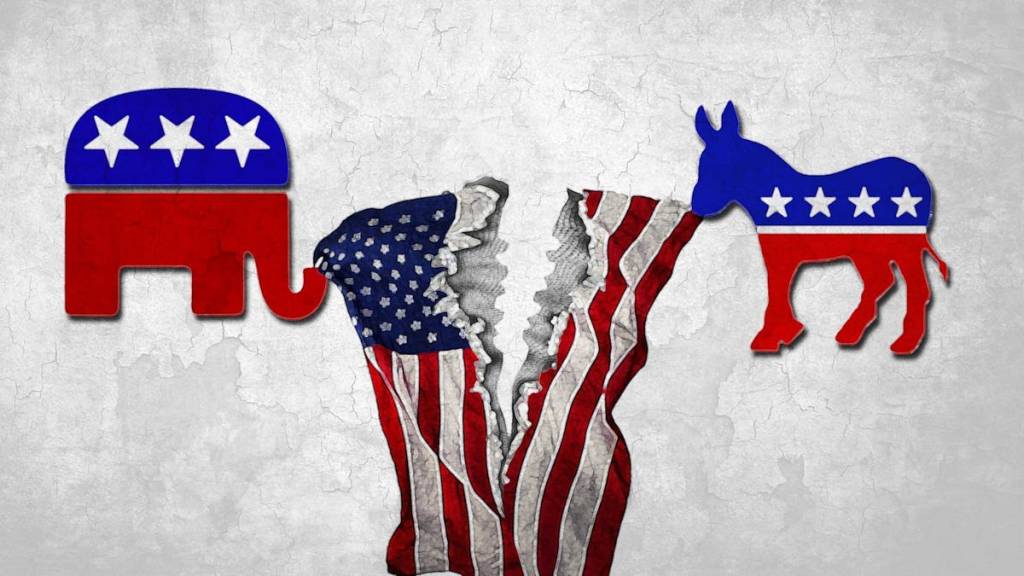
The two major parties, held together by little more than shared contempt for each other, have little incentive to actually solve problems. As one analyst put it, unresolved problems are electoral weapons. Immigration, healthcare, housing, the debt — these fester not despite the two-party system, but because of it.
So Where Does That Leave Us?
With a system rigged toward extremes. With choices shaped by a minority before the majority ever gets a vote. With representatives who can’t compromise without fear of losing their jobs. And with 86% of Americans disapproving of Congress.
Here’s the painful irony: in a 2022 NPR/PBS News/Marist poll, roughly three-quarters of Americans said they believed government officials should “compromise to find solutions” rather than stand on principle and cause gridlock. The majority wants compromise. The system punishes it.
We the People — all 340 million of us — cannot fit into two boxes. And more and more of us know it.
In Part 2 of “We The People”, we’ll look at what’s actually being done to fix this broken system, and what each of us can do to help reclaim our democracy.
What’s your experience with how represented you have felt by either major party? Do you vote in primaries? If you do, is it working for you? If you don’t, why not?
Read more of the Building Bridges To Common Ground Series >>





 Building Bridges To Common Ground
Leave a comment